This won’t be your typical summery Solstice race summary—because this year (spoiler alert), I only made it 10 miles into my favorite 100-mile race.
This Solstice 100 was, by all accounts I heard, another gem of a Joe Billesbach dry course—with lots of minimum maintenance roads, plenty of pit-stop options, and an ADHD-friendly absence of those mind-numbing 8-mile straight shots.

I didn’t get to see but a tenth of what Joe had in store for us this year, and that stings me in the emotions. So instead of describing the course of my race, I want to show you the course of my thoughts during this unusual summer. What I’ve been chewing on, and why that made a “normal” Solstice impossible for me this year.
At 48, I’ve been doing this gravel stuff long enough to feel nostalgia’s pull toward “The Way Things Used to Be.” And sometimes even minor changes in how a favorite event operates can send me pining for the return of simpler races.
So I had approximately a snowball’s chance of coping well with the hefty changes we’re seeing now in Nebraska’s most consequential gravel race. For better or worse, Gravel Worlds is going to be dramatically different from the race we’ve known. I’m dealing with that reality, and I have to talk about it.
This isn’t about GW moving its start/finish line out of Fallbrook—or even its choice to double down on pro payouts. It’s more fundamental than that.

At some point this spring, I noticed Gravel Worlds’ website no longer listed hall of famer Corey Godfrey as race director. I told myself there was a simple explanation. Maybe that page was down. Or the copy got deleted by mistake. I cooled my jets.
But soon after, I realized GW’s site had also been scrubbed of any reference to Craig Schmidt’s Pirate Cycling League. Schmidty’s old skull and chain-link logo, once synonymous with Gravel Worlds, had been unceremoniously buried at sea.
From where I sat at my desk, it sure looked like Corey and Craig, likely the two most respected figures in Nebraska gravel cycling, were no longer involved in the race they built. I think my exact words in that moment were: “What in tarnation.”

I didn’t want to rely on (or partake in) gossip. Nor did I want to bother Corey or Craig with my ambulance-chasing questions. So I sat tight and waited for official communication about this change. The what and why and how and who of it.
I’m still waiting.
Now, I’m not so disconnected as to have heard nothing about what happened. It’s just that those stories aren’t mine to tell. I can only describe how I reacted to changes I saw on the website—my direct experiences—so you can better understand why I turned to this year’s Solstice wanting—needing—it to feel utterly unchanged.
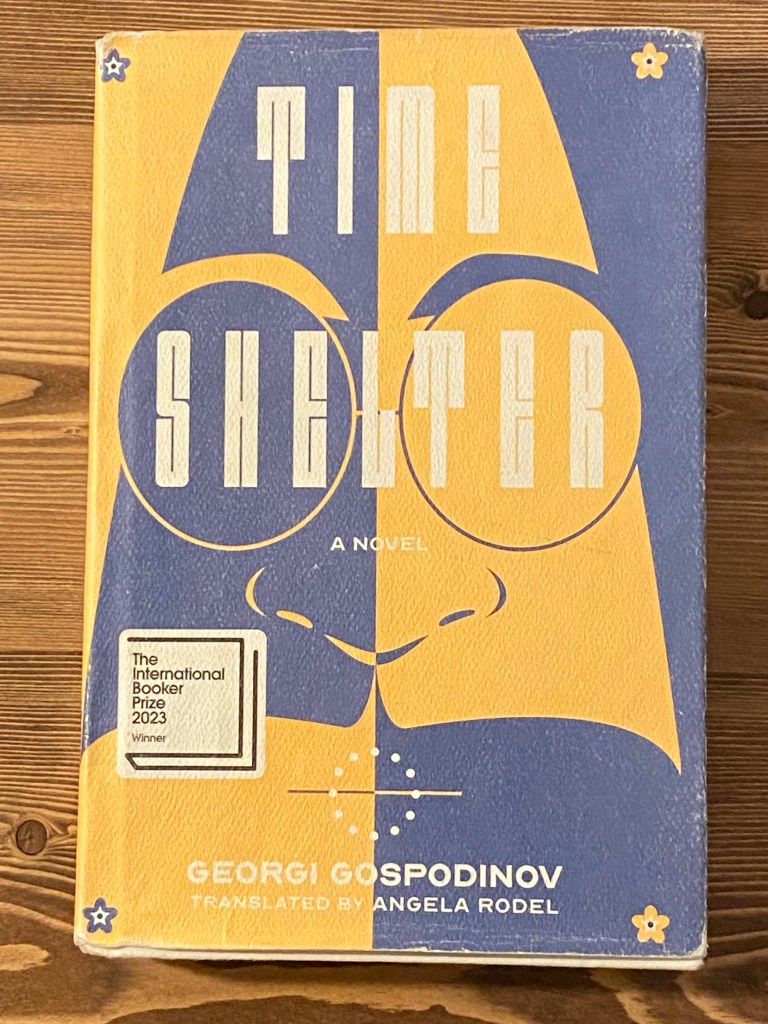
If an unrecognizable Gravel Worlds was the bombshell I was hiding from in the present, maybe Solstice #8 could be my time shelter. Why not reshape that race in my mind to feel exactly like its first running? Just undo all the changes. Untwist that #8 and force it back into a 1. (This seemed feasible to me, as desperate plans often seem to desperate men.)
I started by focusing on the most distinct feeling my memory kept from that first Solstice back in 2017: Oddly, the pinch of swollen feet inside my shoes.

I remember racing that first Solstice not quite healed from a canoe trip on lousy sandals. In the days before that race, I’d taken my son to the Boundary Waters Canoe Area Wilderness in northern Minnesota. And the muddy portaging from lake to lake had done a number on my feet.

Well, as fate would have it, eight summers later, I was retracing that same trip right before the Solstice, this time with all three kids. And I couldn’t have been happier to hear my history echo.
We dipped back into that water, and I tried to stay tuned into all the things in that wilderness that were unchanging. A loon’s call from across the lake. The bugle of hidden elk. The relentless pitch of the Minnesota mosquito. Each detail matched the print of its memory.
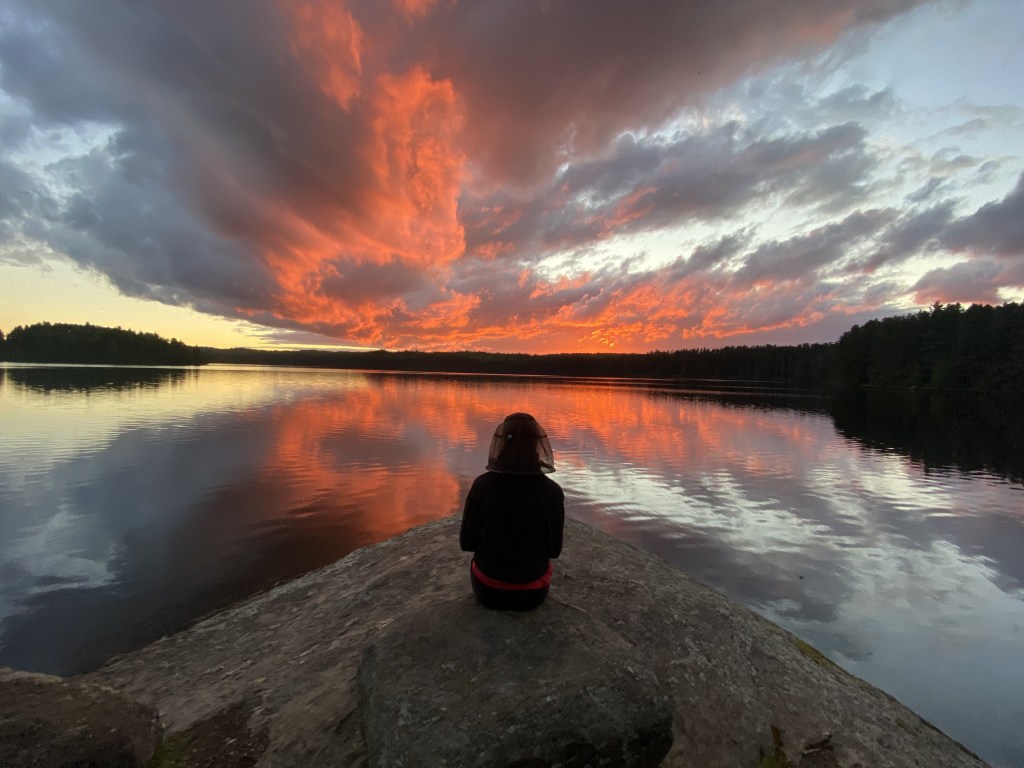
But I noticed differences, too. My feet were faring better on this trip—a minor change I accepted in stride. We also got lost less in 2024. I excused this shift in the matrix because Marcus at 20 was a better navigator than I had been at 40. I could hardly hold that change against him.
The portaging also felt easier this time. Again, I blamed my children. They’ve grown freakishly strong, like their mother. That’s not my fault. I reassured myself that my competence, my ability, hadn’t budged in eight years.
But the biggest difference on this trip had to be the forecast. A glimmer of cellular service beamed us fair warning: Not just rain, but a torrent was coming. Not just wind, but a tree-snapping 70-mph gale. Not just hail, but a chance of baseballs hurled at speed.

Just like that, I abandoned my psychological experiment. I couldn’t hold my kids in a time shelter when what they needed was a storm shelter. We tore down camp at first light and paddled the hell out of there.
The mosquitos were so thick on the way out, they sent the biggest bull moose I’d ever seen plodding into the lake to hide. He dipped his neck, made himself tiny above the water and blew bubbles like a boy at bath time.

Later, I drove us home through the rain with all my conclusions about the past and present flopping like wiper blades. You can always go back. You can never go back. You can; you can never. Always. Never. Go.
What I want from the Solstice, from Worlds, from gravel itself, swings just as madly. I want gravel cycling to grow and keep on growing; I want it to stay exactly like it was. I need it to be wild. And wildly transformative. And stable as stone.
Race directing can’t be a life sentence. But my favorites must never leave.

We want everyone to see gravel cycling as it rides under the radar—all of us part of this beastly moose of a sport, somehow too small for the mosquitos to find. We want gravel to be that secret we tell everyone we kept.
Four days of head-splitting thoughts like these let in a cracking headache. It brought a fever along, and I swung back and forth between sweat and chills. My neck stiffened and my shoulders ached. It hurt to stand.
When it didn’t quit, I saw my doctor, who took an interest in my canoe trip. Your kids get sick? How many days out are you? Any ticks? How were the mosquitos?
“God, the mosquitos,” I said. He nodded, and I understood his biting implication.

I’d likely test negative for West Nile, even if I had it, he said. The test doesn’t detect the virus, but rather the antibodies we create to fight it. He said I hadn’t had time yet to produce an abnormal amount of those antibodies. We could test for it later if I liked, but he saw little point. Given my general health, he said I was unlikely to develop severe illness. And there wasn’t much to be done for it anyway beyond rest and ibuprofen, which I was doing already.
“About this weekend, though,” I said.
He sighed. “Don’t tell me you’re running some crazy marathon on Saturday, are you?”
“No, nothing like that,” I said. “It’s a bike race.”
He smiled. “There’ll be other races.”
That was true. But will they be the same when I get there?

I started the 2024 Solstice because I’ve never not started a Solstice. But I knew I wasn’t healthy enough to finish. So I gave myself 10 miles with friends and teammates. Then I broke off course, and did what I suppose I’d been trying to do all spring. I rode my own way back to the start.
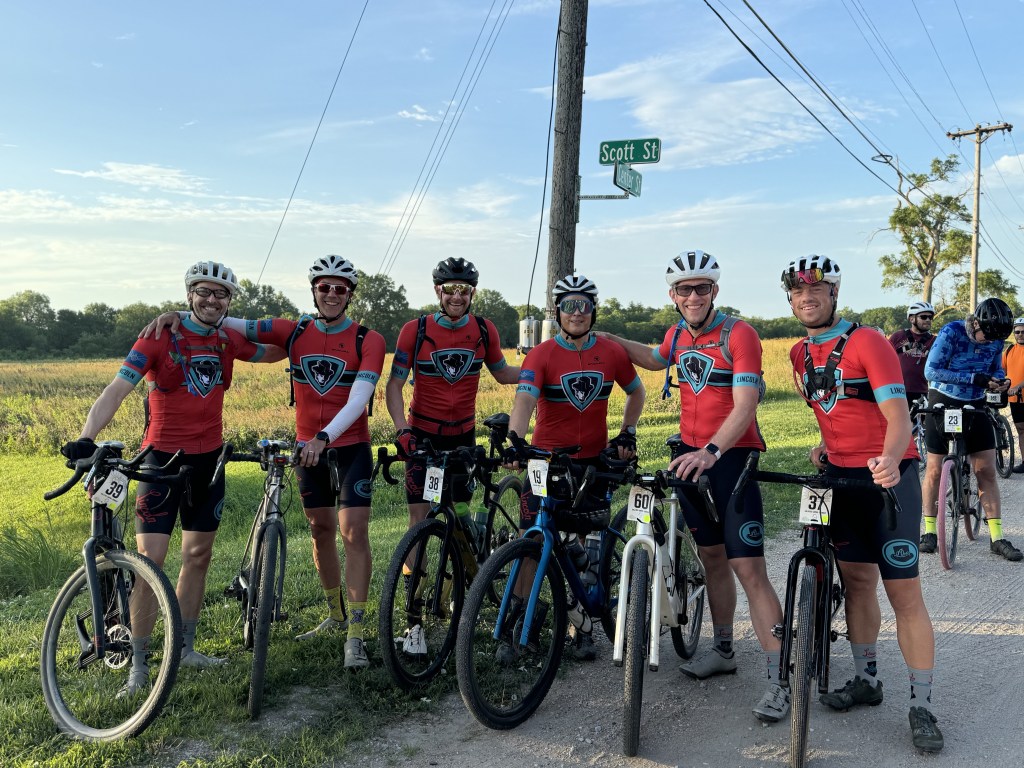
I don’t regret either early exit—on the bike or the canoe. Both times, it was just what I needed to do in weird circumstances.
I’m guessing Corey and Schmidty could relate. Stepping away from an evolving Gravel Worlds had to be an intensely personal and difficult choice. But I’m just as sure it was the right thing for them. And as much as I struggle to imagine Gravel Worlds without their involvement, I’m just as excited to see where their roads lead from here.

***
Once the kids and I left the Boundary Waters, there was only one road out. I pulled our car onto the Gun Flint Trail with mixed feelings. I was relieved we’d dodged the storm. My kids were safe. But I couldn’t help but think of what we’d missed by chopping two days off our canoe trip. All the wild things we’d never see because we quit early.
Exactly then, something big stepped out of the trees 150 yards ahead of our car. Clear of the brush, it turned 90 degrees and trotted toward us. I let off the gas and tried to identify it.
My brain’s first attempt came back: “That’s Seamus.” Seamus is Marty and Amy’s Irish wolfhound, hands down the tallest dog I’ve pet. But Seamus was in Lincoln.

This animal’s head was enormous; its chest strangely narrow. It had legs for days and moved with a springy ease. I stopped the car and scratched “Irish” and “hound” from my search results. I still try not to swear much in front of my kids, but there was no stopping it. “That’s a fucking wolf.”
Its ears upright brushed four feet, and I guessed its weight above 120 pounds.
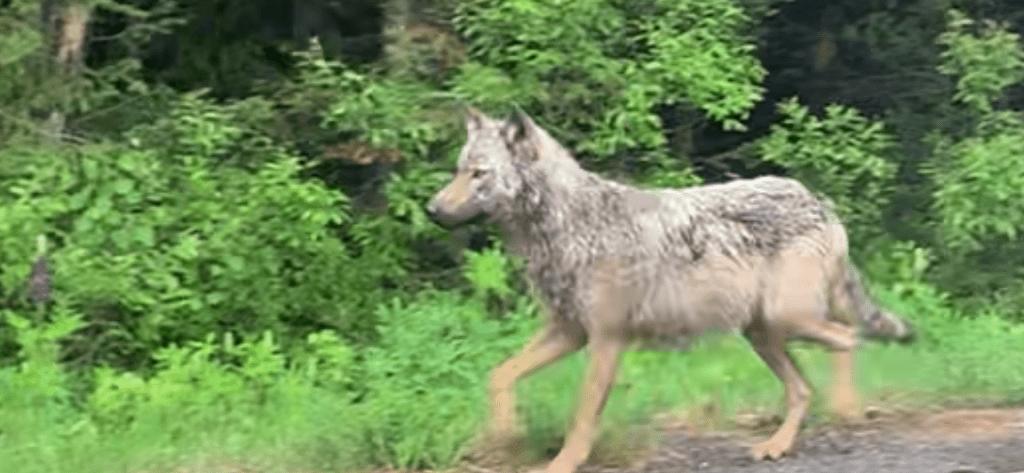
There are maybe 5,000 grey wolves in the lower 48. They’ve been reintroduced in the Rockies—but in Minnesota’s Northwoods, they never left. And this wolf trotting some 12 feet past our car carried with it a lineage that has wound through this same forest on all sides for tens of thousands of uninterrupted years.
I say all this to remind myself: There isn’t a single or certain way to come into that wildness we’re chasing on our bikes. Our paths can change—often in ways we do not like—and still spill us blinking and bewildered into remarkable territory.
I don’t know how Gravel Worlds will change from here. Or how much longer Joe will choose to host a race in Beatrice on the year’s longest Saturday. But I do know every time we leave town on our bikes, our chance of experiencing something wild remains a constant. The Pirate Cycling League has not sunk. And that rare thrill we get riding past our city limits, the wildness of it, has not been eradicated.
 Dirt Tan Bike Club
Such a beautifully written post! You captured the essence of gravel riding and the nostalgia for how things used to be while accepting the changes ahead. There’s something so special about that balance of wildness and connection we chase on our rides. Thanks for sharing this perspective!
LikeLike