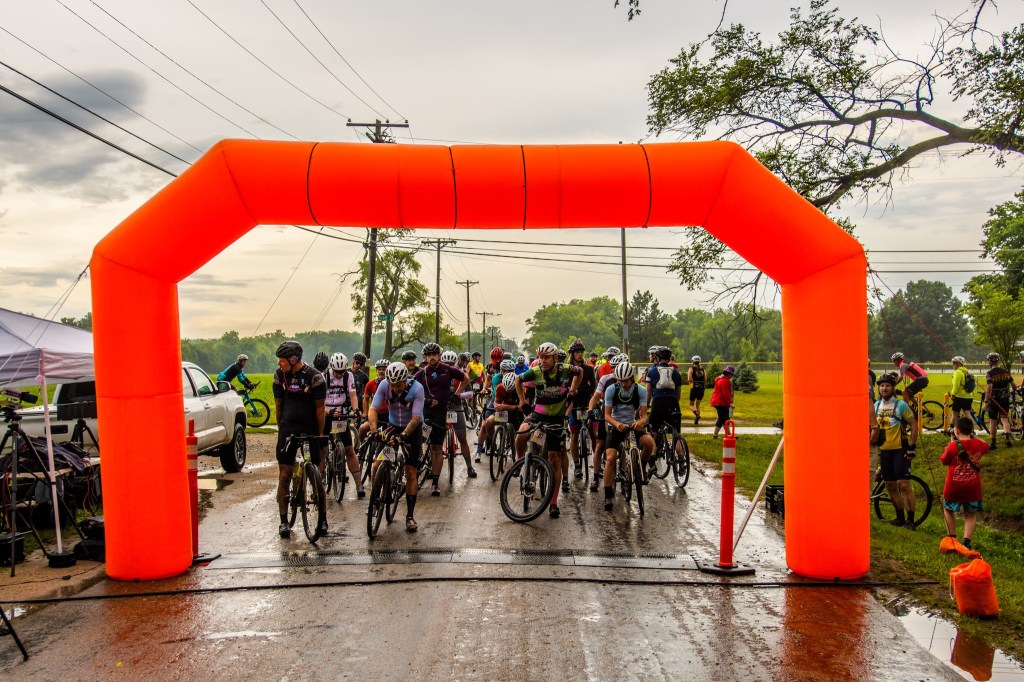
This year’s Solstice 100 had no business hurting like it did.
- The course may have felt endless, but it was 200 miles short of my longest.
- Storms made for some soft roads early, but there wasn’t an unrideable inch over 100 miles.
- And yeah it got muggy, but I’ve hurt less in races 20 degrees hotter.
Still, I spent the last third of my seventh Solstice 100 in a bonked bewilderment. And I couldn’t tell you why. Was I falling sick? Did the squishy roads zap more energy than I realized? Did I foul up my food? My pacing? My water?
My best answer to each question: I dunno. Maybe?
This muddiness is what can make our physiology (and our racing) so frustrating. Each one of us is a messy system of systems. And, sometimes, the true reason for a system-wide meltdown is no clearer than: Sorry. Today’s just not your day.
***
“Today’s just not my day,” I admitted to Peter Welsch once that had been clear for a good while. Pete’s my teammate, best man and best friend since preschool or thereabouts.
Handsome Don Day was right there, too. Before my cookie crumbled, the three of us had been working in a solid paceline of eight or nine nifty racers that included the day’s eventual women’s champion, Abbey O’Brien; men’s fat-bike winner, Derek Augustine; and a couple men’s masters podium finishers.
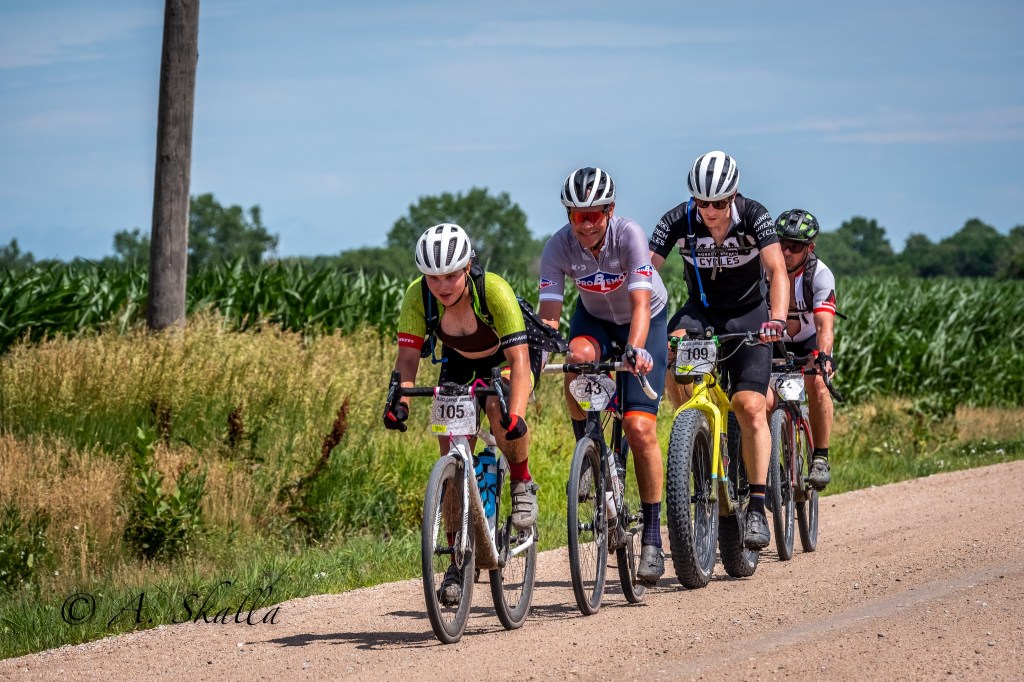
Did hubris push me to hang onto this group too long? I dunno. Maybe?
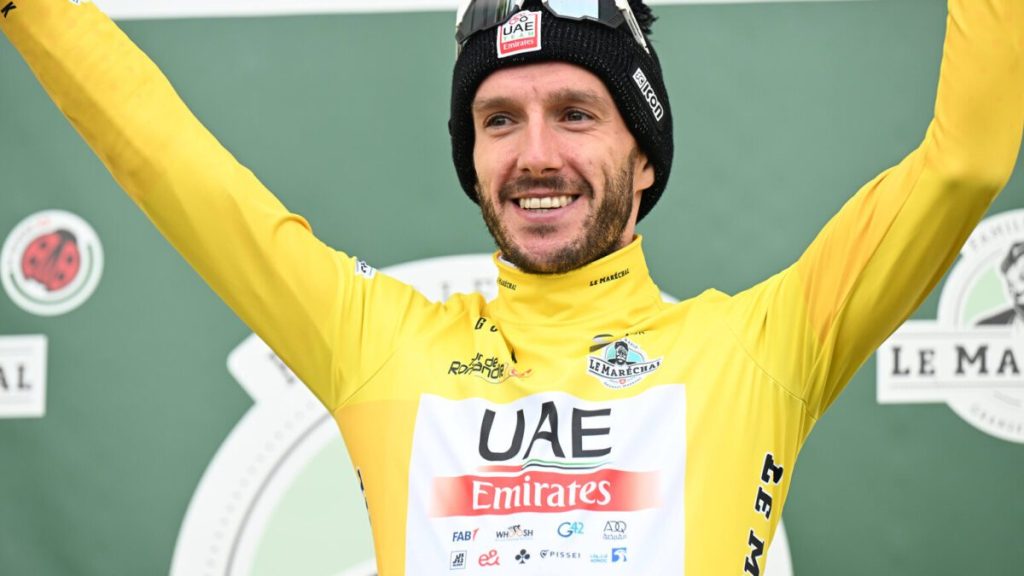
Anyhow, once I started yo-yoing, this paceline’s vocal leader kindly rolled next to me with the verbal smelling salts. Kevin Wilkins from Lincoln didn’t know me from Adam Yates. He didn’t need to care if I fell off the back. But he rooted for me to stick.

“Just hang out back here a while,” Wilkins said. “Skip a few turns. That’s way better than taking one more pull and blowing up.”
And when I failed to rally, Wilkins’ encouragement grew exclamation points. “Hang on, Eric!” (He’d spied my name in black magic marker on the back of my #99 race number.) “You got this! Just hang in there with us and I’m telling you, we’ll get you your fastest gravel century ever!”
God bless this man. What a kind thing to say to a straggling stranger. How could he know that any shot I had at a gravel century PR had come and gone hours earlier in the mud?
I checked our average speed and settled into a nostalgic and self-righteous flashback to speedier summers. Oh, those sunny days chasing the likes of Josh Shear and Randy Gibson all over Seward County…


Are those days gone for good, I wonder, or just on sabbatical? If I train with greater consistency, and conditions cooperate, and race day falls on a my-day kind of day… can a guy pushing 50 still get back there?
I dunno. Maybe?
In any case, this was not that day.

It got uglier from there. Don eventually opted to hold the rhythm that worked best for him, and he’d finish several minutes ahead of me and the infinitely patient Peter.

Over the last few miles, I admit I quit having fun. I felt guilty for slowing Peter down. And I swerved between competing notions to just pedal through it and to pull over and barf.
At 47, I’m receptive to the idea that “Death Before DNF” is a foolish way to ride. With stakes so low, the moment we quit having fun might well be the perfect place to tap out.

But I’m equally inclined to believe the competing notion that the stakes are also high—and we’re lucky when we reach the self-discovery that comes in these depleted states. When our bodies ride through their rubber, we expose the rims of our metallic souls to toss sparks over the gravel behind us. And that’s when we learn the good stuff.
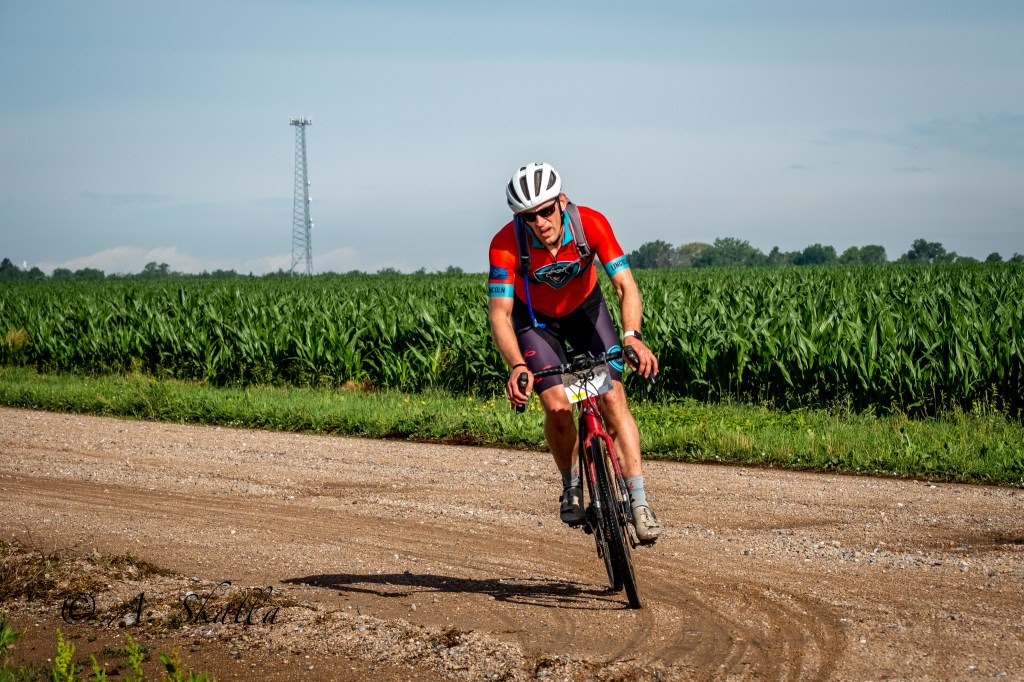
In the lowdown worst of it, I asked myself a question both medical and writerly: How would you describe your pain?
And the first word that bounced back was: Unnatural. This pain is unnatural.
Surprisingly, the word offended me. Or at least, it offended a side of myself I hadn’t yet examined. That side began to buck and holler. What makes you think empty is an unnatural state? What is it with you? Why are you so damn committed to staying unfamiliar with brokenness? (This, evidently, is how I think at the bottom of a good bonk.)
At mile 99, I pulled over to zip up my jersey. I decided it was important to look tidy for my kids at the finish.
Peter waited patiently. “I’d tell you way to go for gutting this out,” he said, “but I’m not sure this is a good thing you’re doing.” (Go through enough stuff in your life, and these little experiments in brokenness become fundamentally less interesting.)
“It’s fine,” I said through the terrible. “I just drew a bad day.”
At the finish, I smiled and hugged my kids, then staggered to the ditch and collapsed for a bit, feeling both nauseous and lucky. Those are strange things to feel in combination, but I discovered they align just fine.
We’re lucky to have our bad days. To have resilience and to feel fortunate—these are connected things.
I spent the next week thinking off and on about these competing notions of our bad and lucky days. I joined my wife and daughters on a canoe trip to Arkansas’ beautiful Buffalo River, where we sweltered and enjoyed our good fortunes.
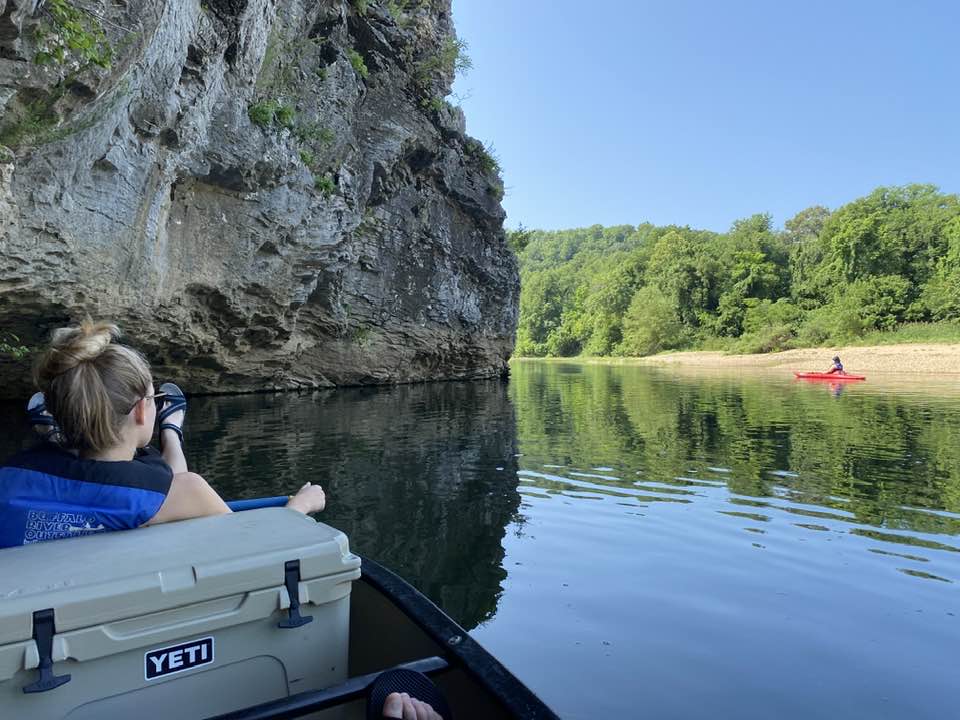
I told my youngest that should we be unlucky and have our canoe overturn, she shouldn’t fret. It was a perfect day for a swim.
Phone reception was spotty along the cliffs that line that river. So I was surprised when my watch thumped a new message against my wrist. It was Joe Billesbach with news about the race. My finish, ugly as it was, had accomplished a beautiful thing. It put my name into a lottery with all the others who reached that finish line in Beatrice. And that name came up on perhaps the biggest prize drawn: a thousand bucks off a new bike from Icelandic manufacturer Lauf.
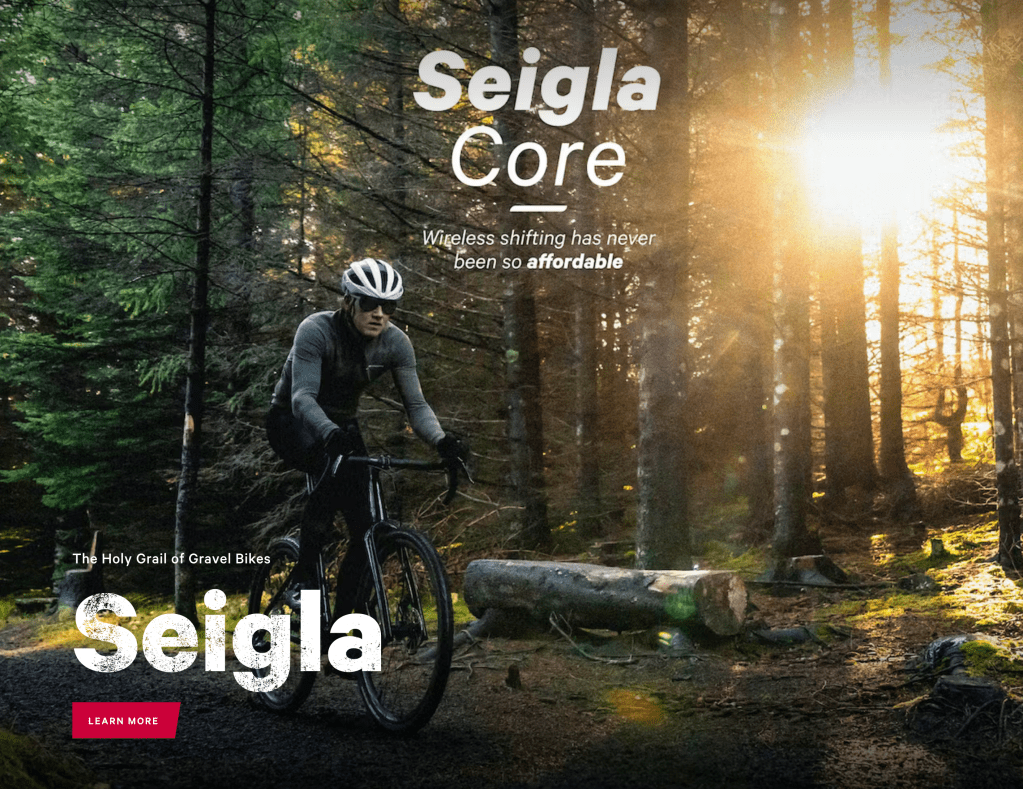
I’ve been coveting Lauf’s Seigla since before Marty got his last year. Teammates Addison and Don are also happy with theirs. But I didn’t get the name—until I looked it up. Turns out “seigla” is Icelandic for “resilience.” How lucky is it to have that?
Did I want it? Joe asked me on the river. I nearly tipped my canoe. Hell yes, I did.
Well, I guess today’s your lucky day, Joe confirmed.
That ugly finish? Not a bad day. Not bad at all.
 Dirt Tan Bike Club